
Glory Days
Jacksonville Joins the U. S. Civil Rights Trail

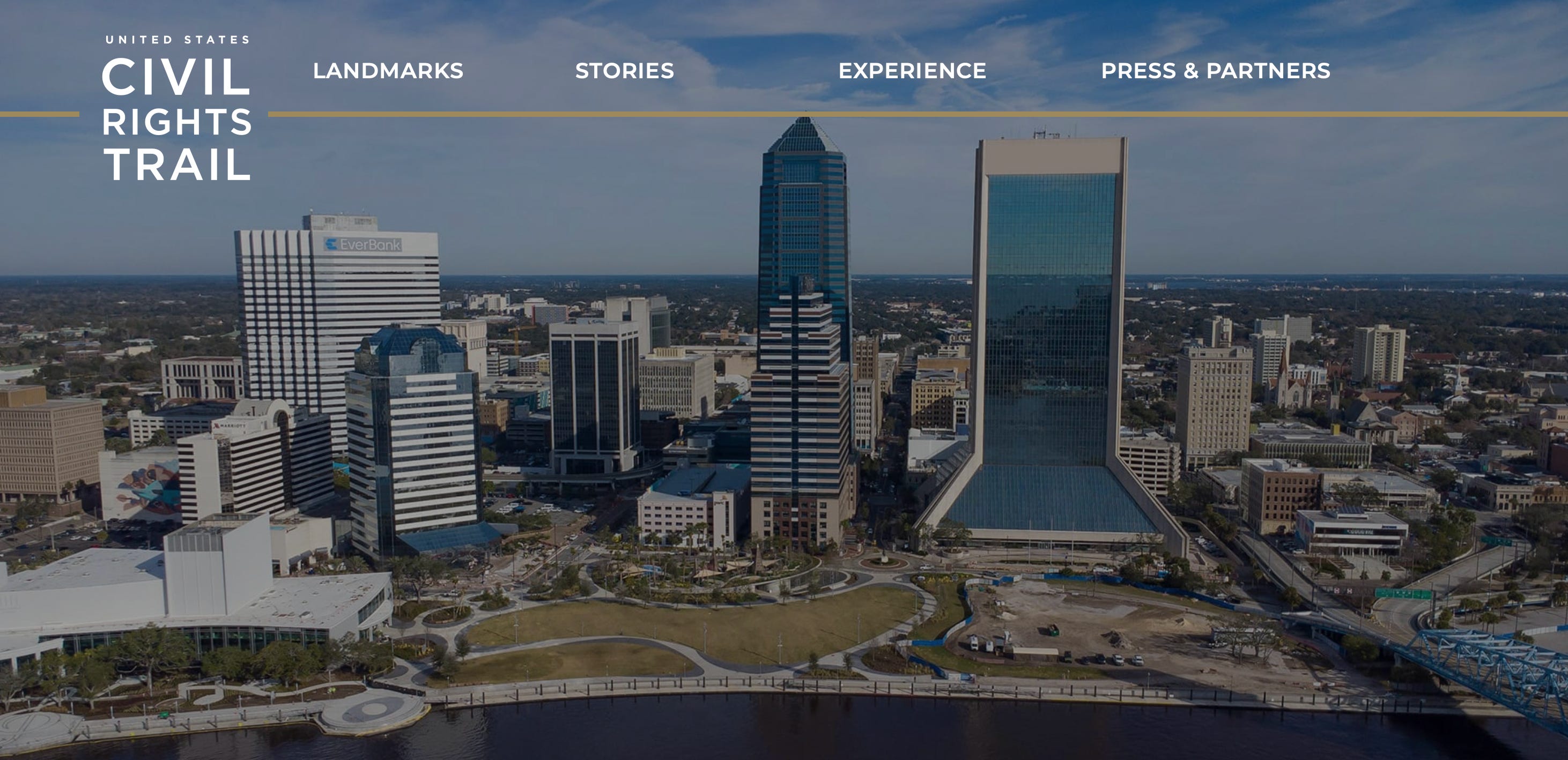
Courage, Sacrifice, and Standing Together
Last week, Mayor Donna Deegan celebrated Jacksonville’s joining the U. S. Civil Rights Trail. In a ceremony held at Mount Ararat Missionary Baptist Church, the site where The Reverend Martin Luther King, Jr. spoke in March 1961, Deegan said our city’s inclusion in a great American success story was “a long time in coming.” “What happened here required courage and sacrifice.”
In speaking of Jacksonville’s role in our region’s historic effort to overturn state-sanctioned racial apartheid, Deegan explained that “Our citizens chose boldly to stand for change.” People were “willing to stand together in moments of uncertainty and in moments of great division,” while “families risked safety to demand equal treatment under the law.”
Jim Crow
Lest we forget, the U. S. Supreme Court’s 1896 Plessy v. Ferguson decision sanctioned the South’s Jim Crow segregation laws, holding that state mandated separation of people based on skin color was constitutional. In a famous dissent, Justice Marshall Harlan argued that the Plessy decision defeated “the beneficent purposes” of our Constitution’s 13th, 14th, and 15th Amendments, amendments that institutionalized our Civil War’s outcome. Historians sometimes call this trio The Second Founding. Taken together, these amendments outlaw slavery, extend citizenship and equal protection of the law, and protect citizen’s right to vote.
Harlan was prescient. He predicted that state enforcement of racial separation would ensure a violent future as Black Americans pursued equal treatment under the law and rights our Constitution guarantees to all citizens. After all, Black Americans enjoyed these Constitutionally protected rights until the Court’s Plessy decision officially took them away. If we live long enough, we learn that what the Supremes recognize they can unrecognize. What they giveth they taketh away.
For 70 years—for three generations—Jim Crow laws rigidly enforced the color line. This separation dominated Southern lives, dividing whites and Blacks into superior and inferior classes. Jim Crow pervaded our collective consciousness, daily.
The U.S. Civil Rights Trail
Birmingham’s 16th Street Baptist Church—the site of the 1963 bombing that killed four little girls— and its Civil Rights Institute, both part of Alabama’s Civil Rights Trail, served as the precursor of the U. S. Civil Rights Trail which was established in 2018 by state tourism officials. This walking and driving tour takes folks through a visit of significant landmark sites—churches like 16th Street Baptist, courthouses, schools, and museums—located in mostly Southern states that, according to the Trail’s website, “played a pivotal role in advancing social justice in the 1950s and 1960s, shifting the course of history.”
The website is a treasure trove, populated by music, photographs, video, and a podcast of interviews and stories about our Civil Rights history. For a generation of Southerners whose memories are dimming, the website itself is a reminder that average folks’ civic sacrifices matter, that just plain folks’ contributions indeed are what make for a more just society, and a more perfect union.
One hopes that the Trail’s story telling will teach folks who did not experience Jim Crow apartheid and the Civil Rights Movement, that they must remain diligent in protecting our Constitutional rights. Without that fidelity to our nation’s founding purpose, successor generations are in danger of losing the rights previous generations fought and died for.
Struggle, Achievement, and A Long Time Coming
Speaking of Jacksonville’s contribution to defeating Jim Crow, Deegan explained that our city’s Civil Rights Trail designation will help us “tell the story of struggle and achievement, and justice and progress; and [of] the people and places that shaped the course of our city and, of course, influenced our nation.” Forty markers will tell our local story.
She also said our joining the Trail has been “a long time coming.”
In spring 2018, then City Council president Anna Brosche appointed a group of local citizens to a Civil Rights History Taskforce. Unanimously approved by City Council, the task force’s creation apparently stemmed from a 2018 Florida-Times Union editorial lamenting Jacksonville and Florida’s exclusion from the then recently announced U. S. Civil Rights Trail.
The task force was charged with recommending how the City of Jacksonville could “better reflect and educate” local citizens and visitors alike about Jacksonville’s “rich civil rights history,” an education that would lift up the contributions local people made toward creating a more just society.
These 27 task force citizens released their report in June 2018. They compiled a local “Civil Rights History Timeline” which begins in 1838 with the founding of Bethel Baptist Institutional Church and ends 180 years later with mention of Jacksonville’s Hope and History Mural. The mural itself, located on A. Phillip Randolph, is a study in hope, memorializing Ax Handle Saturday, that infamous August 27, 1960 afternoon when an angry mob of some 200 white men with local police complicity used ax handles and baseball bats to beat a group of Black youth protesting racism and segregation.
The task force called the mural “an attempt to inspire . . . the community to properly reflect on the past in order to inform and encourage a more just future.” They recommended that Jacksonville “participate in the U. S. Civil Rights Trail,” which itself serves as an opportunity to reflect. Whether or not that reflection might “inform and encourage a more just future,” well, we hope so.
Gratitude
Though it’s taken eight years for our city to realize the task force’s recommendation, we should be encouraged and deeply grateful that our Mayor and City Council members have seen fit to honor the sacrifices courageous Jacksonville citizens made to insure we live into our First and Second Founding’s promise—All created equal, endowed by our Creator with inalienable rights protected by government.
As we spend a year celebrating the 250th anniversary of our Declaration of Independence, we should take time to learn from these citizens’ example, and thank them for their sacrifice. We should help younger folks—who grew up after the dismantling of Jim Crow racial apartheid—develop an understanding of what is required of us to insure we live into our Founding’s promise and maintain our civic faith.
As the Mayor said, our local Civil Rights Trail “represents how far our city has come and the responsibility we share in moving forward”
Its well past time Jacksonville.
Sherry - So glad that you have illuminated our city's joining the Civil Rights Trail.
You know better than us - but for reference for your readers - a powerful education of Civil Rights in the South, unfolds from Memphis to Birmingham to Selma to Montgomery - through a driving tour to visit:
National Civil Rights Museum at the Lorraine Motel - Memphis
Birmingham Civil Rights Institute
Nat. Park Service Visitor Center at the A.G. Gaston Motel (Birm)
Kelly Ingram Park monuments and sculptures (Birm)
16th Street Baptist Church (Birm)
Bethel Baptist Church (Birm)
Dynamite Hill (Birm)
Selma Interpretive Center
National Voting Rights Museum & Institute, Selma
Edmund Pettus Bridge
Freedom March, Hwy 80 - Selma to Montgomery
Nat. Park Service Lowndes Interpretive Center, Hwy 80
National Memorial for Peace and Justice ("Lynching" Museum), Montgomery
Rosa Parks Bus Stop (Mont)
Legacy Museum (Mont)
Civil Rights Memorial Center (Mont)
Freedom Rides Museum (Mont)
Thank you very much Sherry - you educate and inspire us every week.
Thanks for the history lesson, Sherry. The story needs to be told. It’s sad that some folks want to whitewash it.