
“Milker Investors”
Jacksonville’s Corporate Slum Landlords

David Jaffee and Katie Renzi’s study of Duval County’s contemporary housing challenges could have been titled, “Milker Investors: How Corporate Slumlords Ate Your Lunch Money.”
Data rich, The Financialization of Human Shelter: The Rental Housing Crisis in a Sunbelt City explores investor ownership of Duval County’s single- and multi-family rental properties, with a sharp focus on corporate landlord practices, rent and wage structures, the failure of housing policy, and the anxiety renters feel when trying to balance housing payments and the cost of life’s other necessities, especially food.
Jaffee and Renzi paint a grim picture of Jacksonville’s present rental housing situation. Given “rent hikes, maintenance neglect, code violations, and eviction filings,” our researchers conclude that Jacksonville “has a serious corporate slumlord problem,” especially when it comes to investor owned, multi-family rental properties.
“The Rent Eats First”
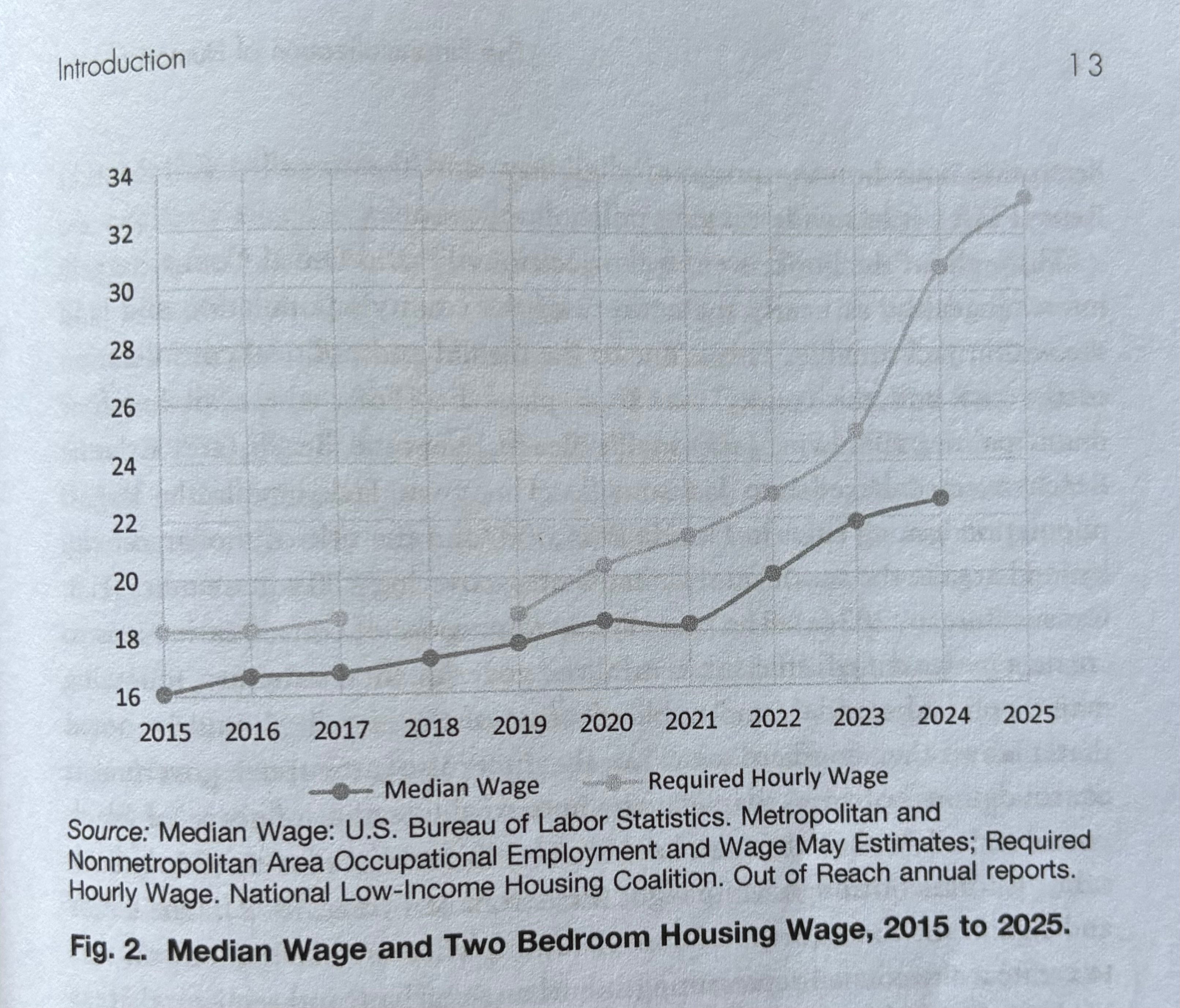
Jaffee, a UNF sociology professor, and Renzi, project manager of UNF’s Jax Rental Housing Project, explain that Duval County is experiencing a “growing disconnect between a relatively low wage labor market and an escalating high rent financialized housing market.” Housing, especially older, single family distressed homes and newer multi-family apartment complexes, are bought or developed in bulk by investment firms. Homes and apartments have become financial assets promising decent returns to the “investor class,” not decent places to live for working people. Over the past five years, this dynamic has metastasized, spreading across multiple Duval County zip codes and leaving behind destabilized neighborhoods and impoverished families.
More than half of our working people—among them childcare workers, teachers, police officers, paramedics, medical assistants, clerical staff, roofers, retail and food service staff—cannot afford the price of Duval County’s rental housing, according to Financialization. These people pay dearly for a place to live, with their rental expense eating into every other expense they have.
As commonly understood, “the rent eats first.”
Abby Normal
Financialization turns any conventional understanding of competitive capital markets on its head. Goodbye to traditional supply and demand curves; hello to monopoly. Not only do corporate landlords own 92% of our multi-family rental units, Jaffee and Renzi describe predatory practices these landlords employ to exact excessive returns for the “investor class.” Renters are routinely subject to unexpected “junk fees,” including garbage collection fees, internet fees, and non-refundable “application fees.” These fees are add-ons. They do not include the payment of traditional deposits, and first and last month rent payments.
Furthermore, Jaffee and Renzi argue that corporately owned rental properties are poorly maintained, and that the threat of renters being evicted with short notice is pervasive. “Duval County currently stands out as the eviction filing capital of Florida,” our researchers state.
Dollars, Cents, and Percents
According to the Jaffee-Renzi study:
Almost half—45%—of Jacksonville households are renter households;
Jacksonville rents increased 37% between 2021 and 2025;
$33.27 is the hourly wage local working people must earn to afford a two-bedroom apartment, without their spending more than 30% of their income on rent (the definition of housing affordability);
67% of local occupations do not pay this hourly wage; and
Corporate landlords own 74% of multi-family properties and 92% of Duval County rental units.
The Human Toll
In interviews with UNF researchers, local renters report horrific experiences: unexpected rent increases, tacked on fees, poorly maintained properties, and eviction threats. Complaints about property owners’ “lack of code compliance,” especially addressing the presence of mold, pervade renters’ concerns, but few are willing to lodge complaints knowing owners may file eviction notices. According to Jaffee and Renzi, “Eviction patterns reflect and highlight the larger current crisis of housing instability and human displacement underway nationally and here in Jacksonville.”
Policy Prescription
Financialization examines myriad housing policies—Low Income Housing Tax Credits, Section 8 housing vouchers, and eviction processes among them—and concludes that our policies favor for-profit developers, not renters. Rental housing, Jaffee and Renzi argue, is “treated as a commodity,” not as a “public good,” one they argue should be built on the understanding that “an adequately housed population benefits the community and improves the quality of life for all residents”
They propose multiple policies to improve living conditions for local renters, among which are establishing:
an Office of Housing Resources to aid tenants in understanding their rights, to help renters locate affordable housing, to help tenants file complaints about property code violations, and protect tenants against abusive property owners;
a Landlord Registry, to “ensure that all rental properties are registered with the city and meet basic legal requirements through a certified inspection process;” and,
creation of a housing revolving loan fund to build not-for-profit, mixed-income, dispersed rental housing to meet the needs of working people.
Elections and Budgets
In her last budget request to City Council, Mayor Donna Deegan included $10 million to seed a local permanent housing trust fund, one that area foundations promised to overmatch with private dollars. City Council denied her request.
As we look forward to the upcoming local budget season, ICARE—Interfaith Coalition for Action, Reconciliation and Empowerment—is advocating that the Mayor again include $10 million in her 26-27 proposed budget for a housing trust fund, arguing that we have reached a “crisis” when it comes to our local rent structure.
If anyone doubts the depth of this deepening crisis, Financialization provides proof. It is must reading for City Council members, and business, civic, and nonprofit leaders. And if time is short, listen to Jaffee and Renzi on First Coast Connect.
Sherry, as always your insights are spot on. The solutions proposed here via Jaffee and Renzi—the Landlord Registry, an Office of Housing Resources, and a revolving loan fund—are promising structural answers Jacksonville needs. For too long, local policy has relied on giving away incentives to private developers while ignoring the immediate protection of renters. Implementing these local tools is a start to shifting the balance of power away from greedy 'milkers' to protecting the rights of hardworking residents and neighborhoods.
It's troubling that the COJ Housing program has $2 million unspent dollars for the fiscal year ending June 30, 2026. Especially since 3 of the 4 means-tested repair programs have been closed out for some time. Keeping seniors and others in their homes costs relatively little; new housing, even when there are set-asides for working folks, is expensive and takes time to build. How about it, Mayor Deegan: Divert that $2 million to repairs NOW (before some bright MAGA Council president sweeps it elsewhere.)